
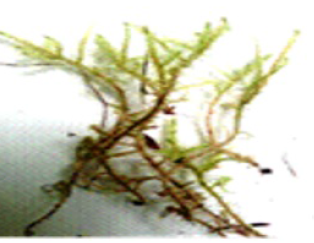


Comparing atmospheric trace element accumulation of three moss species
- Nhatrang Institute of Technology Research and Application, VAST, Vietnam
- Institute of Physics of Vietnamese Academy of Science and Technology, Hanoi, Vietnam
- Frank Laboratory of Neutron Physics, Joint Institute for Nuclear Research, Dubna, Russia
- Dalat University, Dalat, Vietnam
Abstract
Introduction: The intention of Vietnam to participate in the European-Asian Moss Survey in the framework of The United Nations Economic Commission for Europe - International Cooperative Programme on effects of air pollution on natural vegetation and crops (UNECE ICP Vegetation) necessitates choosing appropriate moss species that grow in the tropical and subtropical climate of Vietnam. The three selected moss species, divided into phytogeographical elements, were as follows: Leucobryum (aduncum, albidum), Hypnum commutatum and Barbula indica.
Methods: The present study focuses on Central Vietnam where 18 samples of the three above moss species were collected in the vicinity of Dalat and Hue cities. Elements in the moss samples were detected by neutron activation analysis (NAA) at the IBR-2 reactor of the Division of Neutron Activation Analysis, Frank Laboratory of Neutron Physics, Joint Institute for Nuclear Research in Dubna, Russia.
Results: The analytical results for twenty-three trace elements, which were used to study elemental accumulation abilities of the three moss species in the air, were Na, Mg, Al, Cl, K, Ca, Ti, V, Mn, Fe, Co, Zn, As, Br, Rb, Sr, Sb, I, Cs, Ba, La, Th, and U. The accumulation abilities were found to decrease in the following order: Leucobryum > Hypnum > Barbula. However, Leucobryum, because of its short stem, was not judged to be a suitable candidate for biomonitoring.
Conclusion: The element accumulation abilities of Hypnum moss were better than those for Barbula, but both were comparable and could be used as indicators for air deposition monitoring; however, Hypnum was not widely present in Vietnam. Thus, Barbula indica moss could be used for performance of atmospheric deposition monitoring in Vietnam.